Blog

  • Cover Crops for Summer Nematode Management

    Figure 1. Roots of blue lupin (left) and sunn hemp (right) are infected with Meloidgyne arenaria root-knot nematode and stained with acid fuchsin. Nematode galls and egg masses are visible on blue lupin, indicating its susceptibility to the nematode. In contrast, sunn hemp-infected roots are gall-free with a few egg masses, suggesting that it is a poor host for M. arenaria.

    By Abolfazl Hajihassani and Josiah Marquez

    Multiple cover crops are excellent candidates for vegetable growing systems in the southern United States due to their ability to fix nitrogen, build and maintain soil organic matter, and suppress soilborne pathogens, nematodes and weeds. In addition, cover crops can be a valuable strategy for improving microbial diversity and soil health when properly implemented.

    There is plenty of evidence in scientific literature to support positive effects of certain cover crops in management of plant-parasitic nematodes. The key to success is understanding the factors that drive variation. Though suppressive cover crops will not eliminate nematodes from soil, they may reduce their population densities enough to allow proper production of susceptible vegetable crops in infested fields.

    In Georgia, multiple root-knot nematodes (Meloidogyne spp.) are widely dispersed in the southern part of the state where they cause severe yield losses particularly in cucurbits, eggplant, tomato and pepper. During a survey in 2018 for nematodes in commercial vegetable-growing regions in southern Georgia, root-knot nematodes were found in approximately 67 percent of fields.

    In the Southeast, chemical control is the most predominant approach for managing Meloidogyne spp. in intensive cultivation systems of vegetables.

    However, certain summer cover crops, including sunn hemp (Crotalaria juncea), sorghum-sudangrass (Sorghum bicolor x S. sudanense) and velvetbean (Mucuna pruriens) have been implicated in reducing population densities of root-knot nematodes in soil. In Georgia, despite long growing seasons, the practice of growing two to three crops on the same piece of land often leaves a narrow window for the use of cover crops.

    COVER CROP CULTIVAR CONSIDERATIONS

    Many summer cover crops are susceptible to nematodes, resulting in an undesired population increase in soil during the growth of crops. To avoid this, cover crop species or cultivars that are poor hosts (resistant) to nematodes should be recognized.

    In an attempt to find alternatives for control of root-knot nematodes in vegetable production systems, a series of greenhouse experiments was conducted in 2019 at the University of Georgia Tifton campus. The goal was to identify cover crop species/cultivars with potential to prevent the reproduction of M. javanica, M. incognita and M. arenaria. The cover crop susceptibility/resistance was characterized by evaluating root galling and egg-mass index.

    Results exhibited that different cover crops respond differently to infection by root-knot nematodes. For example, certain nematode-infected cover crops produce both galls and egg masses on roots, whereas others may only induce either galls or egg masses (Figure 1). M. javanica, M. incognita and M. arenaria aggressively reproduced on blue lupine (Lupinus perennis), hairy vetch (Vicia villosa) and cowpea (Vigna unguiculata). These plants were highly susceptible to these nematode species.

    Cover crops that were highly resistant across all three Meloidogyne species include velvetbean, marigold (Tagetes sp.) and sesame (Sesamum indicum). Resistance to parasitic nematodes is characterized as the ability of a plant species to prevent root-knot nematode development or reproduction.

    The reproduction of these nematode species on sorghum-sudangrass and sunn hemp varied from susceptible (good host) to highly resistant (nonhost) plants. For example, an unspecified cultivar of sunn hemp was susceptible to M. arenaria and resistant to both M. javanica and M. incognita.

    KEY POINTS

    In summary, proper selection of a cover crop plays a key role in control of root-knot nematodes. It is important to note that a cover crop species may not provide resistance to all species of root-knot nematodes. In addition, all cultivars of the same cover crop may not create equal levels of nematode control.

    Figure 2. University of Georgia researchers are studying the effects of sunn hemp and tillage practices on soilborne diseases, nematodes and weeds. Sunn hemp is harvested and chopped followed by tilling the residue into the soil.

    Special attention to the presence of other plant-parasitic nematodes in soil is also necessary when planting a cover crop. Past research has suggested that Meloidogyne-resistant cover crops may support the reproduction of other nematode types in the soil. If vegetable growers think they are having issues with nematodes, soil samples can be analyzed at nematode diagnostic services to determine the types/species of nematodes and their population density for proper selection and management of cover crops to meet goals.

    Other key factors to get the optimal benefits of cover crops are planting time, seeding rates and termination (mowing) times. Currently, field research (Figure 2) is being conducted in southern Georgia to determine the effect of spring and summer planting of sunn hemp for optimal biomass production and its influence on nematodes, weeds and soilborne diseases. The goal is to examine the effects of cover crops alone or in combination with tillage practice or chemical control approaches for effective management of plant-parasitic nematodes.

  • Hot, Dry Weather Impacts Florida’s Tropical Fruits

    By Clint Thompson

    Florida’s hot and dry weather this winter and spring has impacted its tropical fruits, according to Jonathan Crane, University of Florida tropical fruit crop specialist. From lychees to avocados and mangos, none were immune to high temperatures over the past few months.

    Lychees

    Lychee requires exposure to cooler temperatures. If they don’t get much of that, they don’t bloom very well.

    “The fact that we’ve had very warm winter; November, December and January, this has affected the natural bloom for lychee. They don’t flower much when that happens, when it’s too warm for too long. The fruit set on that is down, not everywhere, but I’m talking about in South Dade, mostly,” Crane said. “North of us, some of the other counties, Martin, Palm Beach and others, they get more cool weather. So, they’re probably okay, I’m not sure. Certainly, in Dade County, it’s been too warm of a winter to have good fruit set for lychee.”

    Avocados and Mangos

    As for mangos and avocados, they require a period when they’re not growing or are just dormant.

    Avocados

    “For some of our avocados, the bloom and fruit set was affected by the very high temperatures; the dry climate, low humidity, lack of rainfall even if you were irrigating. This has affected some of the fruit set on some of the early varieties of avocados,” Crane said. “It is not everywhere and in not all varieties and not in all locations but on some of them. There was some effect on the avocado bloom.

    “(For mangos) it looked like we were going to have a good bloom but it’s been sort of spotty. We sort of had two or three smaller blooms. Most of what I see out there didn’t set all that well. Not exactly sure what’s going on with that because usually they set pretty well. This year, the set hasn’t been as good as previous years, and I suspect again it’s because of the warm weather. They do require a period of no growth in order to flower. If we stay warm, then what happens is the flowers are mixed in with leaves and it’s generally not as good.”

    High Winds

    Mangos

    Crane also attributes high winds to a low fruit set.

    “Another thing that happens is if it’s very hot and dry, especially if it’s windy … just the banging of the flowers into the leaves and stems knocks the flower buds off and knocks the small fruit off,” Crane said.

    Crane said lychees will be harvested beginning in June. Avocados and mangos will begin to be harvested at the end of May.

  • UGA Specialist Expects Farmers to Plant Hemp in June

    agriculture
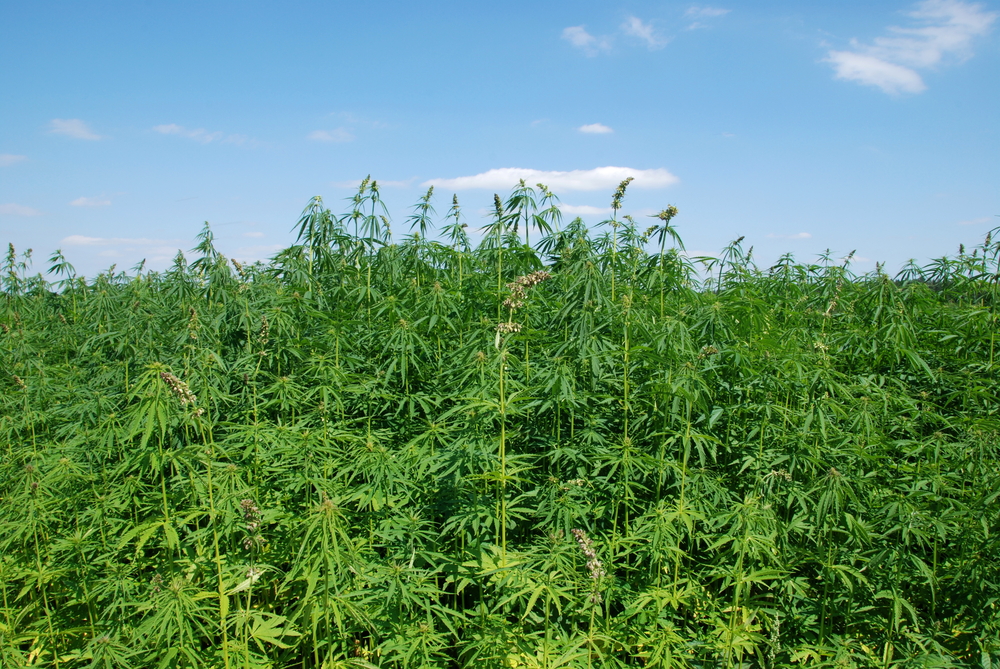
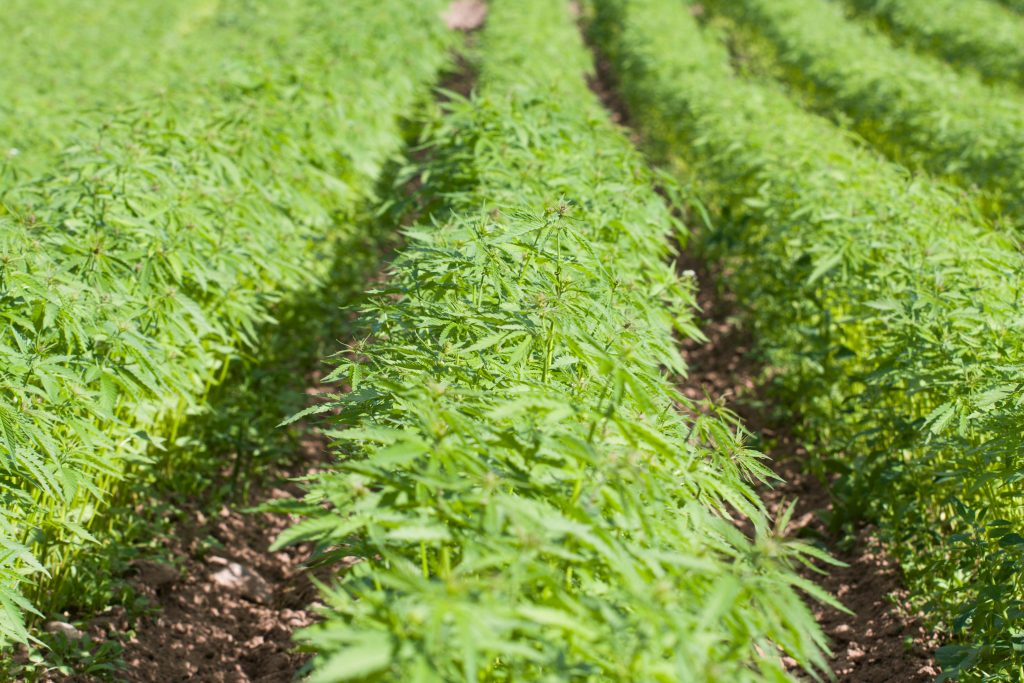
    Pictured is a file photo of industrial hemp.

    By Clint Thompson

    Georgia farmers are expected to soon plant this year’s hemp crop, said University of Georgia Cooperative Extension hemp specialist Tim Coolong. He predicts early June for when hemp will be planted commercially for the first time in Georgia.

    “I’ve talked to some people that as of last week everything was a go for their license. They just hadn’t physically received it yet. I am under the assumption, as are a lot of other people that they should be getting licenses pretty quickly so we can go ahead and plant,” Coolong said. “I figure they will start in June, I would imagine. I think some of the potential growers I’ve talked to, maybe they’ve put some pre-orders in for plants, but they wanted to make sure they got a license before they dropped several thousand dollars. I think there may be a little bit of a delay for some of these guys before they get their plants in.”

    According to Mike Evans, director of plant industries who oversees the hemp program at the Georgia Department of Agriculture, they received 166 applicants from farmers who are interested in growing hemp.

    Coolong said recently that he is not worried about oversupply of hemp in Georgia. He believes enough rules and regulations are in place to prevent that from happening.

    Hemp Regulations in Georgia

    Permits or licenses issued will expire at the end of the year and must be renewed. Evans said the Georgia Hemp Farming Act mandates that a Georgia producer can only sell to a Georgia processor. Out of state sales are not permitted.

    The license fee for growers is $50 per acre and is capped at $5,000. The cost is $25,000 for a processor’s permit.

    Coolong will continue different research projects to evaluate hemp’s effectiveness in growing in Georgia. He started a planting date trial last month to see how early growers can plant without inducing flowering. Other major trials include variety testing and fumigation. Coolong will resume planting next week and continue through the second week in June.

  • Pepper Weevils Out of Control in Florida Vegetable Fields

    Figure 1. The pepper weevil is one of the most serious pests of peppers.

    By Clint Thompson

    Florida produce growers need to be wary of the pepper weevil, which is running rampant in the state’s vegetable fields.

    According to the South Florida Vegetable Pest and Disease Hotline, pepper weevils are out of control on the East Coast in Florida vegetable fields. Growers are also seeing damage increasing in eggplant.

    Damage is so extreme in remaining peppers that growers are having to terminate many of their plantings.

    In addition, South Florida farmers are reporting that the Cuban pepper weevil is a problem.

    University of Georgia entomologist David Riley said that 70% of the winter peppers imported into the U.S. are grown in Mexico, where pepper weevils originate. He stresses that even a small percentage of weevil-infested fruit can lead to an infestation.

    Thresholds are one adult per 400 terminal buds or 1% of the buds infested. Populations are best observed by visual examination and yellow sticky traps.

    Insecticides are commonly applied to the plant foliage at short intervals once budding begins. Chemical suppression is feasible, but insecticides vary in effectiveness. Despite the presence of chemical insecticides some loss is inevitable. Actara, Vydate, diamides and pyrethroids can be used in a program to control the pepper weevil. Consult the University of Florida/Institute of Food and Agricultural Sciences recommendations for currently labeled insecticides for proper control in Florida.

    There are a couple of factors for farmers to consider if they hope to disrupt the weevil’s life cycle. Proper sanitation and a crop-free period, if it’s accompanied by the destruction of alternate hosts can be effective. Sanitation involves any practice that eliminates or reduces the amount of pathogen inoculum, pests, or weed seeds that are still present in the field.

  • Watermelon Shortage by Memorial Day?

    By Clint Thompson

    Watermelons are already in short supply. There soon could be a watermelon shortage, said Carr Hussey, a watermelon farmer in Florida and Alabama and chairman of the board of the Florida Watermelon Association.

    “It’s drying up by the minute. There’s going to be shortage for Memorial Day, I do believe,” Hussey said. “The kicker is, how fast can North Florida come in? Right now, today’s it’s 91 degrees here right now. North Florida can’t be too far behind. A few days like that will bring them ahead a little bit.

    “I can tell you this weekend, South Central Florida is going to be done. When I say done, there will be a few loads come. But they’re going to be done with any volume shipping. I think in my mind the bigger part of next week is going to be a shortage. They won’t be out completely, but there will be a shortage. It’ll drive the price up pretty good.”

    Hussey farms between 500 and 600 acres in the Southeast under Sweet Mama Produce. His Florida crop is done, though he’s helping other farmers in Lake Placid and Wauchula, Florida. Hussey also has about 300 acres in Cottonwood, Alabama. He expects to be shipping the last week of the May.

    Positive Prices for Producers

    He said prices are around 20 cents per pound right now but could improve to 22 or 24 cents around Memorial Day weekend. He said the reason Florida is running out of melons is due to three straight weekends of rain events. Heavy rains on mature vines led to a quick harvest season.

    “It’s going to be short supply next week, I don’t know what it’s going to be like after that. I don’t know how fast they’ll come on (elsewhere) and with what kind of volume,” Hussey said. “I understand that Georgia’s late. That’s what I’m hearing. There’s going to be a small gap next week and it could be another gap going into the fourth of July if Georgia’s late.”

    Another reason there could be a watermelon shortage is due to an extreme low supply in Mexico. They’ve had poor weather conditions in Mexico.

    “Their quality’s all shot to pieces right now,” Hussey said.

  • South Carolina Farmers Ready to Plant Hemp Crop

    hemp program
    South Carolina farmers are expected to start planting hemp this week.

    By Clint Thompson

    The first hemp plantings in South Carolina will be conducted this week, according to David DeWitt, Hemp Program Coordinator with Clemson University Extension. He believes there will be more hemp growers this year with smaller acreage compared to previous years.

    “I think we shifted some from last year at this time when we were getting started. Everybody was jazzed up and we had some good-sized farmers that were getting ready to plant larger acres; 30 to 40 acres of hemp,” David DeWitt said. “I think a lot of that has subsided this year. The lack of demand, backlog in farms to the processor is the kind of thing we’re experiencing. Some of that has calmed down.”

    This is the third year that South Carolina farmers will be able to produce hemp. Interest has grown each year the crop has been produced. Eva Moore, communications director for the South Carolina Department of Agriculture, said there were 350 interested applicants this year. The Department of Ag issued the permits during the last week in April.

    DeWitt said the planting window last year was from late-May to mid-June, though he said there were some who planted the first week in May and produced a pretty good crop.

    He’ll also be a part of some hemp research this year. The research is mainly designed to assist growers with hemp management decisions. The research will evaluate weight, CBD content and harvest time, as well as test chemical products on hemp mites.

    To learn more, see how the USDA approved South Carolina’s Hemp Farming State Plan.

  • Watermelon Supply Down; Prices Stay High for Farmers

    By Clint Thompson

    The watermelon supply chain is currently down. As a result, prices are up. It’s a pleasant surprise for Florida growers who are currently harvesting this year’s crop, according to Gene McAvoy, University of Florida/Institute of Food and Agricultural Sciences Extension agent emeritus.

    The watermelon supply line is currently decreased, due in large part to less imports from Mexico.

    “(The farmers) were a little bit apprehensive that with all of this COVID-related decline in demand that there might not be a demand for the (watermelon) product. They’ve had poor weather growing conditions in Mexico, so supplies are down from that side,” McAvoy said. “Even here in Florida, we had a really hot and dry March and April which affected pollination. The fruit set is less than what we would consider to be normal.”

    Other Florida produce farmers have struggled with selling this spring’s crop amid the coronavirus pandemic. The pandemic has shut down the country since the second week in March. The resulting shutdown led to closures of restaurants across the U.S.

    Positive Prices

    But as businesses begin to open up and states begin loosening the restrictions on self-quarantining, demand for fresh fruits and vegetables is improving. The same appears to be true for watermelons.

    “The supply is down a bit, kind of lining up with demand. Prices are good. They’re getting 20 cents, 19 cents per pound, which is decent for starting out the season. Sometimes it’s a little higher. But things are moving,” McAvoy said.

    The bulk of Florida is still harvesting or nearing harvest of watermelons. McAvoy said farmers in the extreme South Florida area, around Immokalee, Florida, are done harvesting this year’s crop. He added that watermelon harvests are continuing in Glades County, Charlotte County, Desoto County and up into Hillsborough.

    Georgia and Alabama should start picking in early-to-mid June.

  • Sanitation Key Following Harvest for Pest, Disease Control

    By Clint Thompson

    File photo shows tomatoes harvested.

    Vegetable farmers are reminded they need to practice proper sanitation once harvest season ends. Doing so will protect against future pests and diseases.

    According to the South Florida Vegetable Pest and Disease Hotline, one of the best tactics that growers can do for themselves and their neighbors is to clean up crop residues promptly after harvest. Sanitation involves any practice that eliminates or reduces the amount of pathogen inoculum, pests, or weed seeds that are still present in the field.

    One of the biggest problems associated with lack of sanitation is with whiteflies. They overwinter and can survive on multiple hosts. This is especially true for those hosts that are not eliminated thoroughly after harvest. They are already a problem for Georgia vegetable farmers.

    If farmers will destroy tomato vines promptly, they will kill off whitefly populations. They’ll also eliminate the transmission of the tomato yellow leaf curl (TYLCV) and other viruses to subsequent crops. It also will eliminate inoculum from late blight and other fungal diseases. This is particularly important in the case of TYLCV and other viruses. Sanitation, a crop-free period, and whitefly/thrips control are the only tools currently available for the management of this disease.

    Downy and powdery mildew on melons can spread via wind from older, diseased plants to plants in surrounding fields that are still maturing. If farmers will plow or disk under infected plant debris, this will help cover up the inoculum and speed up the disintegration of plant tissue. It kills the pathogen.

    Cull Piles

    Cull piles should also not be neglected. Several scouts have reported over the past few years that they have found both insects and diseases such as TYLCV, late blight, whiteflies and others in volunteer plants springing up around cull piles.

    Soil tillage can destroy insects and expose them to birds and other predators. It can also speed the breakdown of plant residues that harbor insects and plant pathogens. By either allowing the organic matter in a field to decompose completely before planting the next crop or allowing a fallow period between crops, you can enhance the control of numerous insects and diseases.

  • Presence of Powdery Mildew a Concern for Southeast Vegetable Growers

    By Clint Thompson

    Powdery mildew disease is present on older squash in various vegetable fields across South Florida. According to the South Florida Vegetable Pest and Disease Hotline, respondents report that the disease has also started to show up on watermelon crops across the region as well.

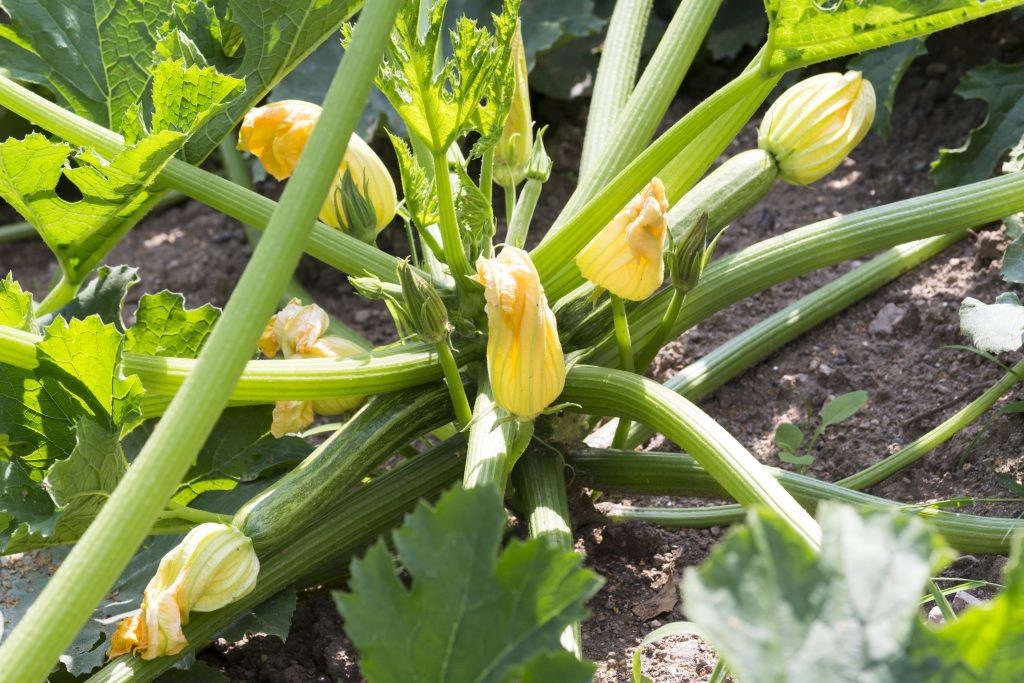
    File photo shows squash growing on a plant. Powdery mildew disease is present on some squash plants in South Florida.

    It’s also reported that powdery mildew is showing up on squash and cantaloupe in the Manatee Ruskin area.

    The disease thrives in high humidity, making the Southeast region a prime target for powdery mildew. Places in Georgia, Florida and Alabama are especially vulnerable the next two weeks. Temperatures in Tifton, Georgia are expected to go back up into the 80s this week and 90s next week. And there’s little to no chance of rainfall. It’s the same forecast for Mobile, Alabama, whose best chance of rain is a 40% chance on Monday, May 18 and Saturday, May 23. Temperatures in Tampa, Florida are going to be in the high 80s the next two weeks.

    The disease can develop rapidly under these favorable conditions.

    Disease Symptoms

    Symptoms on watermelon plants appear as yellow blotches on the oldest leaves first.  If the disease is left untreated, the fungus spreads to the entire leaf. These blotches become bronzed and turn dark brown or purplish as the disease progresses during the season. Eventually the leaf dies and has a crisp texture.

    Powdery mildew normally appears in the middle of the production season. Preventive treatments can help maximize the crop’s yield potential and prevent plant damage. Growers need to scout fields regularly to know if the disease is a factor in their fields.

    There are some vegetables that can tolerate or are resistant to the disease. Most commercial cucumber varieties grown in Florida have acceptable levels of resistance.

    Podosphaera xanthii and Erysiphe cichoracerarum, are the two pathogens that cause powdery mildew disease on cucurbits, particularly cucumbers, year-round. P. xanthii is an aggressive pathogen that attacks during warmer months. E. cichiracearum strikes during cool spring and early summer.

  • N.C. State Farmers Markets Continue to Encourage Social Distancing

    From North Carolina Department of Agriculture and Consumer Services.

    RALEIGH – As North Carolina begins to open up, state officials are reminding shoppers at the four state-operated farmers markets in Asheville, Charlotte, Colfax and Raleigh to continue practicing social distancing and other safety measures while visiting the markets.

    tastier tomato
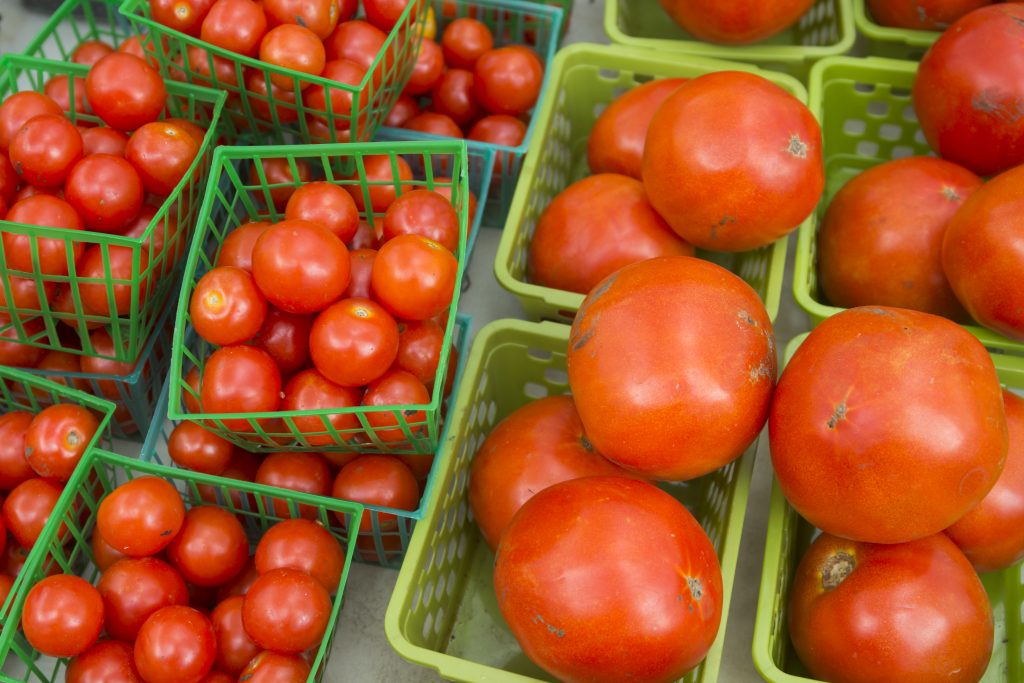
    Tomatoes on sale at a farmers market.
    Photo taken 07-17-17

    “We have taken every precaution to ensure the safety of both farmers and shoppers at the market,” said Agriculture Commissioner Steve Troxler. “Now, we need the public to do their part by practicing social distancing and continuing to follow the recommendations of the CDC and public health officials.”

    Many changes have already been made at farmers markets to ensure the safety of shoppers. These changes include limiting the number of vendors at the market, increasing spacing between vendors, adding additional hand sanitizer stations, and providing masks and gloves for market vendors. In addition, the department is asking families to designate a family shopper and limit their time at the market.

    “We love seeing entire families spend a Saturday morning at the market, but now is not the time for that,” Troxler said. “We encourage people to designate a family shopper, make a shopping list before they come, purchase what they need and go home.”

    About our markets:

    State Farmers Market, 1201 Agriculture St., Raleigh Hours: Monday through Saturday, 5 a.m. to 6 p.m. and Sunday, 8 a.m. to 6 p.m. Special Days for At-Risk Population: Mondays and Tuesdays Note: State Farmers Market Restaurant, N.C. Seafood Restaurant, Market Grill, 321 Coffee are closed.

    WNC Farmers Market, 570 Brevard Road, Asheville Hours: Open seven days a week from 8 a.m. to 5 p.m. Special Days for At-Risk Population: Mondays and Tuesdays Note: The Moose Café is closed.

    Charlotte Regional Farmers Market, 1801 Yorkmont Road, Charlotte Hours: Open Tuesday through Saturday from 8 a.m. to 6 p.m., and Sunday, 12-6 p.m. Special Days for At-Risk Population: Tuesdays-Thursdays

    Robert G. Shaw Piedmont Triad Farmers Market, 2914 Sandy Ridge Road, Colfax Hours: Open seven days a week from 7 a.m. to 6 p.m. Special Days for At-Risk Population: Mondays and Tuesdays Note: The Moose Café is closed. For more information follow the markets on Facebook or visit www.ncagr.gov/markets/facilities/index.htm.