Blog

  • USMCA Set to Enter Into Force July 1

    commissioner

    By Clint Thompson

    The United States-Mexico-Canada Agreement (USMCA) will enter into force July 1. Unfortunately, it’s still without much protection for vegetable and specialty crop producers, according to economists and industry leaders.

    florida fruit
    Joyner

    Florida Fruit and Vegetable Association President Mike Joyner hopes that will change soon.

    “When Congress passed USMCA, we unfortunately did not get the provisions we were hoping for in USMCA. The Florida delegation, to the person, hung together. Because they hung together, we were able to get a commitment from Ambassador (Robert) Lighthizer to come up with a plan as to how we’re going to address this issue,” Joyner said. “We felt like that was a strong commitment. It’s in writing. We trust Ambassador Lighthizer. Right now, all indications are USMCA will go into effect July 1.

    “If you go back and look at the letter, the commitment that the delegation was able to get, that within 60 days of entry into force, Ambassador Lighthizer has to have a plan. Probably within the next few weeks, we’ll present some information to the U.S. trade Representatives Office that they need to consider. It’s data that clearly shows what’s happening with Mexican produce. We’re hoping that over the next two or three months, we can work with Ambassador Lighthizer and his team and come up with something that will help solve this issue.”

    USMCA Background

    According to the USMCA press release, the agreement marks the beginning of a historic new chapter for North American trade by supporting more balanced, reciprocal trade, leading to freer markets, fairer trade, and robust economic growth in North America. However, Southeast farmers still will compete against imports of Mexican produce.

    “The concern with the USMCA, in terms of specialty crops, is that there are a lot of lower priced crops, low cost labor in Mexico that are coming into the U.S. and competing with southeast fruits and vegetables,” UGA Cooperative Extension Ag Economist Adam Rabinowitz said. “There was hope that there would be some restrictions or some assistance that would help with the ability to compete with those Mexican imports. But there was nothing within that. As a result, it’s looking like there’s going to be a challenge in terms of being able to compete on price with the southeast fruits and vegetables with the imports from Mexico.”

    The influx of Mexican produce was especially discouraging this year for farmers. They had to deal with the aftermath of the coronavirus pandemic at a peak time of spring harvest.

    In a prior VSCNews story, Charles Hall, executive director of the Georgia Fruit and Vegetable Association, said “it’s insulting to the specialty crop growers who are suffering with COVID-19. It’s taken away markets. Then on top of that, we’ve got Mexican products coming in on top of us to drive the prices even further down.”

  • Understanding Nitrogen Needs of Plants From Fertilizers

    Jagathi Kamalakanthan, agronomist
    NCDA&CS Agronomic Services Division
    919-733-2655
    File photo shows a vegetable garden.

    RALEIGH — Gardening can provide much needed physical activity and emotional well being to balance the effects of social distancing associated with the COVID -19 pandemic. Many people turn to their lawns and gardens to relieve stress and enjoy nature. If you are working in your yard, following are some helpful agronomic tips for best results.

    Nitrogen is the nutrient most in demand by all plants, but its application rate is not based on a soil test. That is because nitrogen is very unstable in soils given the precipitation and varied climate of North Carolina, making soil testing to determine levels for a growing season unreliable. 

    “Typically, from growing season to growing season, the nitrogen available for plant growth will generally be low,” said agronomist, Jagathi Kamalakanthan. “For that reason, it is important to replenish nitrogen levels in each growing season.”

    NCDA&CS fertilizer recommendations will provide a fertilizer grade or analysis to supply nitrogen plus additional phosphorus or potassium based on soil test results if needed. In general, most plants will benefit from 1 pound of nitrogen per 1,000 square feet, except for centipede grass where only a half-pound per 1,000 square feet is recommended.

    Every bag of fertilizer has three numbers such as 10-10-10 or 21-0-0. The first number represents nitrogen (N); the second number represents phosphorus as phosphate (P2O5); and the third number represents potassium as potash (K2O). Each of these numbers is a percent on a weight basis. For example, 100 pounds of 10-10-10 N-P-K fertilizer has 10 pounds each of nitrogen, phosphate and potash.  

    A nitrogen application is usually timed at the beginning of the growth cycle for plants and some plants require more nitrogen than others during the growing season. For example, Bermuda turf grass needs 1 pound of nitrogen per 1,000 square feet, in the months of May, June and September. In contrast, centipede requires a very low nitrogen rate of a half-pound of nitrogen per 1,000 square feet, only in mid to late May. Vegetable and flower gardens usually do well with 1 pound of nitrogen per 1,000 square feet applied at planting or soon afterward. “Some vegetables, such as sweet corn, may require additional nitrogen during the growing season,” Kamalakanthan said.

    Nitrogen in appropriate amounts and at the correct time are good for plant growth; however, applying nitrogen amounts beyond plant needs can do harm.

    “Too much nitrogen encourages excessive vegetative growth and may delay the onset of flowering and fruit production, plus excess nitrogen may pollute our ground and surface waters,” Kamalakanthan said. “Additionally, very lush plant tissue may be more susceptible to disease or insect damage. Winterkill of warm-season grasses may also be more prevalent since extra nitrogen may promote growth and delay dormancy. Fertilizer burn from excess soluble fertilizer is another concern.”

    Use nitrogen correctly and it will promote healthy green plants for your enjoyment. For more information on fertilizers, refer to this link. Contact us at 919-733-2655 if you have questions or need more information.

  • FFVA President: CFAP Payment Amount Falls Short

    By Clint Thompson

    The Coronavirus Food Assistance Program (CFAP) will bring much-needed relief to farmers impacted by COVID-19. Unfortunately, the funds allocated per farmer is not enough, says Florida Fruit and Vegetable Association (FFVA) President Mike Joyner.

    florida fruit
    Joyner

    “Florida agriculture was just crushed by the pandemic. A lot of our members have had some really, really big losses. When that direct payment was first mentioned with that $250,000 cap, we were extremely disappointed. We are very appreciative that the cap has been raised,” Joyner said. “We’re grateful for the increase. But it still falls short because we did have members that lost millions. These are family farms.

    “We still wish we could get a little bit more. We might try to do that as they begin to talk about a CARES (Act) 4 package. We’ll push to see if we can get that cap raised a little bit more and some more money into Florida.”

    CFAP Background

    According to https://www.farmers.gov/cfap, CFAP provides vital financial assistance to producers of agricultural commodities who have suffered a 5%-or-greater price decline or who had losses due to market supply chain disruptions due to COVID-19 and face additional significant market costs. Many of the fruits and vegetables, including tomatoes, watermelons and strawberries are covered under CFAP and were in production in Florida when the coronavirus struck in mid-March.

    Much of the produce season for this year is completed in Florida, especially in the southern portion of the state. Many are already thinking about next season and need CFAP funds in place so they can proceed accordingly. Thankfully, CFAP payments are already being issued.

    “We just hope they turn those checks around pretty quickly because these growers in south Florida are going to make decisions on inputs into July, first part of August.That’s when they’ll start ordering seed and fertilizer and all that kind of stuff,” Joyner said.

  • Meeting meat demand with plant proteins

    By Jaya Joshi

    As the world population keeps growing, so does the pressure to feed everyone without increasing carbon footprints. By 2050, the world population is predicted to increase to 9 billion people, and the demand for meat is expected to rise by 73 percent. Meeting this demand would require an additional 160 million tons of meat per year. 

    Are we ready to keep up with the demand? No! For more meat, we need more land, water and processing plants. This would result in less land for crop production, more methane production from livestock, more demand for animal feed and more health concerns. Augmenting western diets with sustainable protein sources from plants is a good option to reduce meat demand and mitigate climate change.

    There is rising interest in plant-based protein among consumers who want to eat less meat and dairy and more vegetables and fruits without compromising their protein intake. The global plant-based protein market is growing rapidly. With a projected compound annual growth rate of 15 percent for 2020–2024, this industry is expected to be worth $24 billion by 2024.

    Most plant proteins come from fat- and protein-rich seeds of legumes such as soybeans, peas and many other bean varieties.

    SOY, PEA AND POTATO

    Soy protein has captured a large share of the global plant-based protein market in a very short time. Soy protein is on a par with animal protein in terms of quality and may have health benefits that include reducing cholesterol levels and improving bone mineral density. Examples of successful soy protein meat-substitute products are the burgers and meatballs from ImpossibleTM Foods, now widely available.

    Although soy is the best-known meat alternative, peas do everything that soy, wheat and corn don’t. Pea is considered the most sustainable source of plant protein, and its texturing properties and high digestibility make it a popular additive in the “mock-meat” industry. Beyond Meat® is an example of pea-based protein.

    Pea protein has many other applications but is perhaps gaining greatest acceptance as a dairy replacement. One such example is Ripple® milk, which is a good source of essential amino acids and calcium. In 2018, DuPont Nutrition & Health released TRUPRO TM 2000 pea protein for beverages, made from North American yellow peas.

    Potato is another vegetable that has potential in the plant-based protein market. The contents of essential amino acids such as methionine and lysine are lower in most plant proteins than in animal proteins, but potato protein is an exception. The essential amino acid content of potato protein is comparable to both the milk protein casein and egg protein.

    OTHER OPTIONS

    Soy, pea and potato proteins are just the beginning. There are many other animal-protein alternatives breaking into the market, including peanuts, lupin beans, jackfruit and oilseeds, as well as non-plant sources like mushrooms and algae.

    As it ranks second in the United States for vegetable and fruit production, Florida has an edge in growing for the plant-based protein market. Florida farmers already grow potatoes, snap beans and peanuts. Given the fact that Florida is one of the only states that can grow produce year-around, plant-based protein farming could have a bright future in Florida.

    DEMAND AND INNOVATION

    Despite the recent surge in demand, plant-based proteins are still a niche market rather than a staple in American diets due to their perceived lack of variety, quality, taste and texture. But this is changing fast. A burst of innovation is emerging, bolstered by collaboration between agriculture and the exciting new field of synthetic biology.

    Synthetic biology seeks to build upon and reimagine nature’s designs. Scientists are beginning to understand the factors behind meat products’ textures and flavors, and synthetic biologists can incorporate these qualities when designing new protein products. Plant-protein products are now available that are a match for their animal protein counterparts. For example, the famous plant-based ImpossibleTM burger contains engineered heme, a protein originally derived from soy plant roots that gives the burger its meat-like flavor, color and texture.

    There is even more to learn from plants: Recently, the U.S. Department of Agriculture launched an initiative called MP3 (“more proteins, more peas, more profits”) to understand the genetics of pea protein’s digestibility and desirable texture. In the future, combining convent­ional breeding with genome editing and synthetic biology could further strengthen the ability to produce high-quality, appealing plant proteins economically and sustainably.

    The coming years are likely to see a substantial market shift toward plant protein-based meat and dairy substitutes. The plant-based protein initiative has gained the attention of major players such as the World Wide Fund for Nature, the Global Alliance for Improved Nutrition and the confectionery manufacturer Hershey, who have started the Protein Challenge 2040 project. The goals of the project are to promote plant-based protein consumption, scale up sustainable feed and reduce protein waste. Future partnerships between growers, scientists, govern­ments, and the private sector have the potential to ramp up plant-protein production to address the surging demand of proteins in an eco-friendly way.

  • USDA Issues First Coronavirus Food Assistance Program Payments

    United States Department of Agriculture

    Perdue

    (Washington, D.C., June 4, 2020) – U.S. Secretary of Agriculture Sonny Perdue today announced the USDA Farm Service Agency (FSA) has already approved more than $545 million in payments to producers who have applied for the Coronavirus Food Assistance Program. FSA began taking applications May 26, and the agency has received over 86,000 applications for this important relief program.

    “The coronavirus has hurt America’s farmers, ranchers, and producers, and these payments directed by President Trump will help this critical industry weather the current pandemic so they can continue to plant and harvest a safe, nutritious, and affordable crop for the American people,” said Secretary Perdue. “We have tools and resources available to help producers understand the program and enable them to work with Farm Service Agency staff to complete applications as smoothly and efficiently as possible and get payments into the pockets of our patriotic farmers.”

    In the first six days of the application period, FSA has already made payments to more than 35,000 producers. Out of the gate, the top five states for CFAP payments are Illinois, Kansas, Wisconsin, Nebraska, and South Dakota. USDA has released data on application progress and program payments and will release further updates each Monday at 2 p.m. ET. The report can be viewed at farmers.gov/cfap.

    FSA will accept applications through August 28, 2020. Through CFAP, USDA is making available $16 billion in financial assistance to producers of agricultural commodities who have suffered a 5%-or-greater price decline due to COVID-19 and face additional significant marketing costs as a result of lower demand, surplus production, and disruptions to shipping patterns and the orderly marketing of commodities.

    In order to do this, producers will receive 80% of their maximum total payment upon approval of the application. The remaining portion of the payment, not to exceed the payment limit, will be paid at a later date nationwide, as funds remain available.

    Getting Help from FSA

    New customers seeking one-on-one support with the CFAP application process can call 877-508-8364 to speak directly with a USDA employee ready to offer general assistance. This is a recommended first step before a producer engages the team at the FSA county office at their local USDA Service Center.

    Producers can download the CFAP application and other eligibility forms from farmers.gov/cfap. Also, on that webpage, producers can find a payment calculator to help producers identify sales and inventory records needed to apply and calculate potential payments. Producers self-certify their records when applying for CFAP and that documentation is not submitted with the application. However, producers may be asked for their documentation to support the certification of eligible commodities, so producers should retain the information used to complete their application.

    Those who use the online calculator tool will be able to print a pre-filled CFAP application, sign it, and submit it to your local FSA office either electronically or via hand delivery through an office drop box. Please contact your local office to determine the preferred delivery method for your local office. Team members at FSA county offices will be able to answer detailed questions and help producers apply quickly and efficiently through phone and online tools. Find contact information for your local office at farmers.gov/cfap.

    Policy Clarifications

    FSA has been working with stakeholder groups to provide further clarification to producers on the CFAP program. For example, the agency has published a matrix of common marketing contracts that impact eligibility for non-specialty crops and has provided a table that crosswalks common livestock terms to CFAP cattle categories. Updated information can be found in the frequently asked questions section of the CFAP website.

    More Information

    To find the latest information on CFAP, visit farmers.gov/cfap or call 877-508-8364.

    USDA Service Centers are open for business by phone appointment only, and field work will continue with appropriate social distancing. While program delivery staff will continue to come into the office, they will be working with producers by phone and using online tools whenever possible. All Service Center visitors wishing to conduct business with the FSA, Natural Resources Conservation Service, or any other Service Center agency are required to call their Service Center to schedule a phone appointment. More information can be found at farmers.gov/coronavirus.

  • Cristobal Expected to Bring Rain to Southeast

    By Clint Thompson

    Tropical Depression Cristobal’s expected movement into the Gulf of Mexico should bring much-needed rainfall to North Florida and South Alabama. Pam Knox, University of Georgia Cooperative Extension Agricultural Climatologist, says rains over the next week should alleviate some of those drought conditions.

    Map from the National Hurricane Center and Central Pacific Hurricane Center shows Cristobal’s expected path this weekend.

    “The whole Florida Panhandle and then stretching west into the Mobile (Ala.) area has been quite dry. So, they were missed by a lot of the storms that hit north Georgia and north Alabama. They’ve been fairly dry,” Knox said. “They’ve gotten a little bit more relief lately but it’s still dry there. I’ve seen some reports of fires in the area and continuing problems with the dry conditions.

    “The latest seven-day forecast for rainfall, which includes the rainfall that’s coming from Cristobal, looks like the southern part of Georgia and Alabama and the whole panhandle of Florida and really all of north Florida is going to be affected by the rain from this.”

    According to the U.S. Drought Monitor, all of north Florida is either in abnormally dry, moderately dry or severe dry conditions. It’s also the case for southwest parts of Alabama.

    Cristobal is already the third named storm of the season. Knox said the average date for the first sea storm is Aug. 13 so it’s already a real active storm season. But she cautions weather enthusiasts that just because it’s active now doesn’t mean it will stay that way over the course of summer and into fall.

    “All of the ingredients are there for it to be an active season. We’re in neutral conditions and looks like we’re going to go into a La Nina. That definitely correlates with an active season in the Atlantic. 2019 was active but we only had a couple of storms that affected the Southeast. Even though it’s active, it doesn’t necessarily mean it’s going to be big impact for the Southeast. It could,” Knox said.

    While tropical storms and hurricanes can be intimidating with their heavy rains and fierce winds, Knox reassures that they are necessary to replenish dry soils.

    “Tropical storms have an important role to play in the Georgia climate because maybe up to 30% of our summer rain comes from these tropical systems. If we don’t get tropical storms, we could easily go into a drought,” said Knox, who described how Cristobal works. “If you think about how a tropical storm spins, it’s counter-clockwise. It’s going to move west of us most likely. That means we’re going to be in strong flow of air coming up from the south. It’s very juicy air. It’s going to really help set off a lot of rain.

    “Some of the forecasts for rain in the Florida Panhandle, we’re looking at 5 to 7 inches or more of rain over the next week. A lot of that’s going to come right ahead of Tropical Storm Cristobal.”

    Knox said north Alabama and north Georgia aren’t expected to receive as much rain.

  • Cloud-Based Technology Helps Farmers Count Citrus Trees

    UF/IFAS/Dr. Ampatzidis in his lab at the UF/IFAS Southwest Florida Research and Education Center in Immokalee, Florida.
     

    By: Brad Buck, 813-757-2224 (office); 352-875-2641 (cell); bradbuck@ufl.edu

    In his quest to find the right drone and other artificial intelligence to help ensure citrus growers get an accurate count of their crop, Yiannis Ampatzidis and his research team have developed a system known as Agroview.

    The technology saves farmers time and money and helps them accurately count their trees, which is important for insurance purposes.

    The latest results of the University of Florida scientist’s research show a computerized method that counted 175,977 citrus trees on a commercial citrus farm in Hendry County at nearly 98% accuracy.

    Ampatzidis also found that the combination of unmanned aerial vehicles (UAV) and Agroview — a novel type of cloud-based technology — counts trees and measures their canopy, which is important for farmers to maintain their insurance policies. Insurance companies need to know how many trees a farmer has – and how dense they are – so they can decide whether to renew the growers’ policies and at what price.

    “This is critical for breeders and farmers to evaluate the productivity of their plants,” said Ampatzidis, a UF/IFAS assistant professor of agricultural and biological engineering.

    For the new research, Ampatzidis and his colleagues attached an imaging mechanism to a UAV, and it accurately detected citrus trees and gaps between trees in a commercial grove. Because many citrus trees are damaged or die from citrus greening disease, farmers must remove the plants from their groves. That tree removal causes gaps between trees.

    His latest research, published in the journal Computers and Electronics in Agriculture, builds on a study he published last year. In the prior study, conducted on a commercial farm in Highlands County, Ampatzidis also used Agroview. For the current study, UF/IFAS researchers used Agroview again, but they utilized a less-costly camera.

    Since Hurricane Irma, the U.S. Department of Agriculture requires growers to submit accurate tree inventories for all perennial tree policies if a grower suffers a significant increase or decrease in insurance policy coverage each year.

    Until now, growers had to manually count citrus trees. That’s extremely time-consuming, labor-intensive and costly, Ampatzidis said.

    Growers count trees and submit their inventories to their insurance companies. To do this, farmers or consultants utilize at least two full-time workers equipped with a truck or ATV and counting devices, and they drive throughout the groves to manually count trees.

    The new techniques save time and money, said Ampatzidis.

    “We estimate the traditional tree-count procedure can cost around $14 per acre and take up to four weeks to cover 1,000 acres,” he said. “The Agroview application can be used to save the Florida citrus industry — among other industries all over the world — at least 60% of the data collection cost, and 90% of the data collection time.”

    The next steps for Ampatzidis and his research team are to develop:

    • Yield prediction models for citrus and vegetables.
    • Disease detection models for vegetables.
    • Nutrient prediction models and application maps for variable rate technologies, for example, fertilizers and sprayers.
  • USDA Farmers to Families Food Box Program Reaches 5 Million Boxes Distributed

    (Washington, D.C.) – U.S. Secretary of Agriculture Sonny Perdue announced that the U.S. Department of Agriculture’s (USDA) Farmers to Families Food Box Program has distributed more than five million food boxes in support of American farmers and families affected by the COVID-19 pandemic.

    Sonny Perdue

    “The Farmers to Families Food Box Program was designed to put American farmers and distributors of all sizes back to work while supporting over-burdened food banks, community and faith-based organizations and other non-profits serving Americans in need, and the program is doing just that,” said Secretary Perdue. “It’s encouraging to see the passion with which farmers, distributors and non-profits have gone above and beyond to make this program work in support of the American people. Although a momentous milestone, this is only the beginning for the program, and with continued support we expect up to 40 million boxes will be delivered throughout the country by June 30.”

    “Since our launch of the Farmers to Families Food Box, 5 million boxe have been successfully delivered to Americans most in need all across the country. Through this innovative program, small and regional distributors are bringing back their workforce to procure food directly from our American farmers and ranchers. Fresh food is getting to those in need, even in the hardest to reach places, through partnerships with food banks, non-profits and faith-based communities,” said Advisor to the President, Ivanka Trump.

  • Market Looking Good for Tomato Growers

    itc
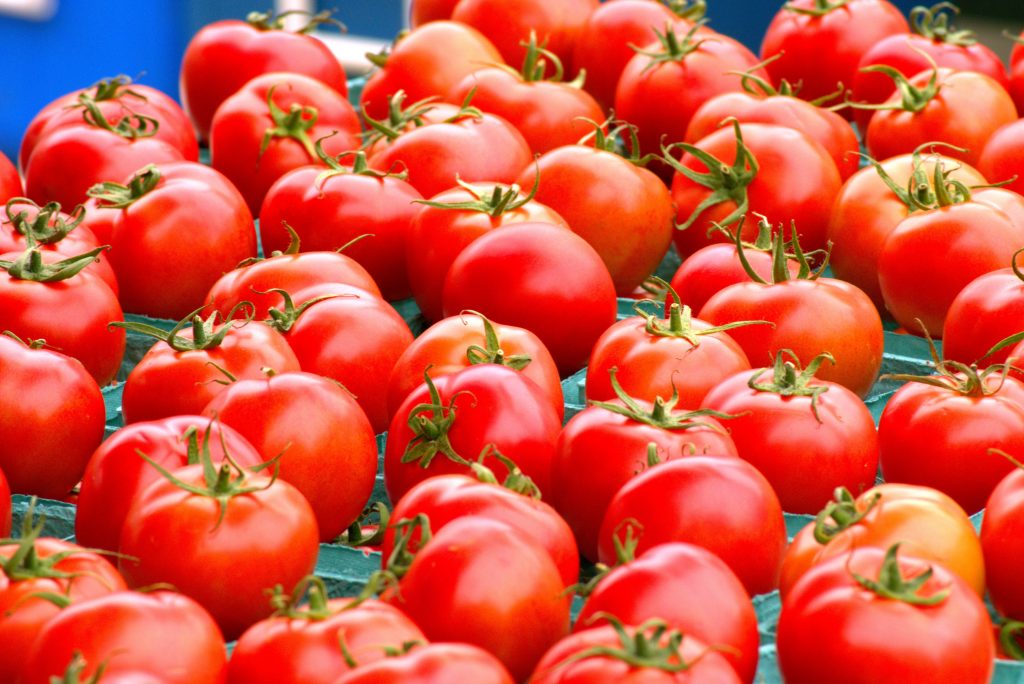
    The tomato market is currently strong for growers in the Southeast.

    By Clint Thompson

    Tomato growers across the Southeast are enjoying high prices right now, which marks a significant change from March when Florida producers had to leave many in the field amid the coronavirus pandemic. That is not the case anymore, however, says Michael Schadler, executive vice president at the Florida Tomato Exchange.

    “Market price has been high. Coming down a little bit the last couple of weeks, but overall, prices have been pretty good,” Schadler said. “That’s just a function of supply has been light out of Florida and supply has been light out of Mexico as well. We would have liked to have had a little bit better yields in Florida this spring. We’ve had yield issues that have limited supplies but the fact that market prices are high after what happened back in March and April, it’s real nice.”

    Schadler attributes Florida’s poor supply to pest and disease pressure.

    COVID-19 Impact

    Florida tomato growers have experienced an up and down season. This is especially true for South Florida production impacted by COVID-19 when it struck in mid-March.

    “It was a situation where we had never seen the markets turn off like that overnight. We’ve certainly gone through our share of bad markets over the decades, usually based on over-supplies coming in from Mexico and even over-supply in Florida. Having bad markets is nothing new,” Schadler said. “Having it come about in that way where everything shuts down, price didn’t matter at that point.”

    Growers could not give their crop away. Tens of millions of tomatoes were lost. But to see the market recover, which will benefit other states like Georgia and Alabama, is encouraging to see.

    “When we were looking at this thing in early April, when we were doing an assessment right around April 1 and going through two or three weeks in an unprecedented environment, we were thinking, ‘Man if this thing doesn’t turn around, we’ve got a big spring crop; the Florida spring crop is pretty big in April and May, we’re going to have devastating losses,’” Schadler said. “Right around April 5 or April 6, demand started to come back. I think what happened was, the buyers that sell into food service, when everything hit the fan in mid-March, they kind of shut down. I think they let the pipeline clear out a little bit. The pipeline was completely empty after the first week in April and they realized, obviously, there’s still demand for tomatoes.

    “That demand came back a little bit, coupled with the fact that Mexico was quite light and Florida volume was lighter than normal. We had lower yields through the spring. We actually were able to bounce back for a big part of April and so far in May as well.

    “As far as an industry as a whole, looking back over the six or seven months of the Florida tomato season, it’s going to average out to be a decent season for us.”

  • Watermelon Board Pivots Nutrition Education Strategy to Digital Model

    With growing season in and home schooling out, NWPB is meeting an essential need for parents working from home and teachers preventing the summer slide

    WINTER SPRINGS, FL — June 3, 2020 — The National Watermelon Promotion Board (NWPB) is realigning resources to adapt to a new climate while focusing on summer sales.

    Watermelons are very nutritious.

    Unlike years past when summer months meant in-person events, the socially-distanced approach adjusts marketing and promotional efforts to continue to position watermelon as the go-to choice for kids and families. NWPB has been partnered with the world’s only rock & roll nutrition show Jump with Jill for over eight years, with a national live tour partnership as the leading line item. With stay-at-home orders in place, Jump with Jill and NWPB are teaming up to bring consumers a digital version of the program called the Jump with Jill Digital Tour with unplugged songs, dances, workouts, activities, and tutorials.

    “Jump with Jill is our longtime partner for kids content and in-school outreach and their primary delivery mechanism was through a powerful live musical show,” says Stephanie Barlow, Senior Director of Communications. They have realigned so that songs about eating fruit like Nature’s Candy and The Sweet Beat can still reach kids even when they are distance learning.”

    Just as the watermelon domestic growing season hits its peak, these free resources and tools serve an important need useful while families are at home. Parents are craving content that can hold their kids’ attention while they work from home and teachers need summer study materials they can use to prevent the summer slide, or the slide backwards that many children make in reading and math skills over the summer.

    “From our homes to families everywhere, we are thrilled to be able to perform and teach,” says Jump with Jill creator, Jill Jayne, who brings her credentials as a Registered Dietitian and singer into everything she touches. “When they announced school closures, we were forced to accept that a screen would be a mandatory feature in our relationship with our audience. So we wanted to use it to communicate to kids in a powerful way letting them know that – we are still here, we are still singing, and we still love you.”

    For more information and to explore the resources available from NWPB and Jump with Jill, check out Facebook, YouTube, visit Watermelon.org or JumpwithJill.com.